The problem
Efficiency slips, and the unit stays on
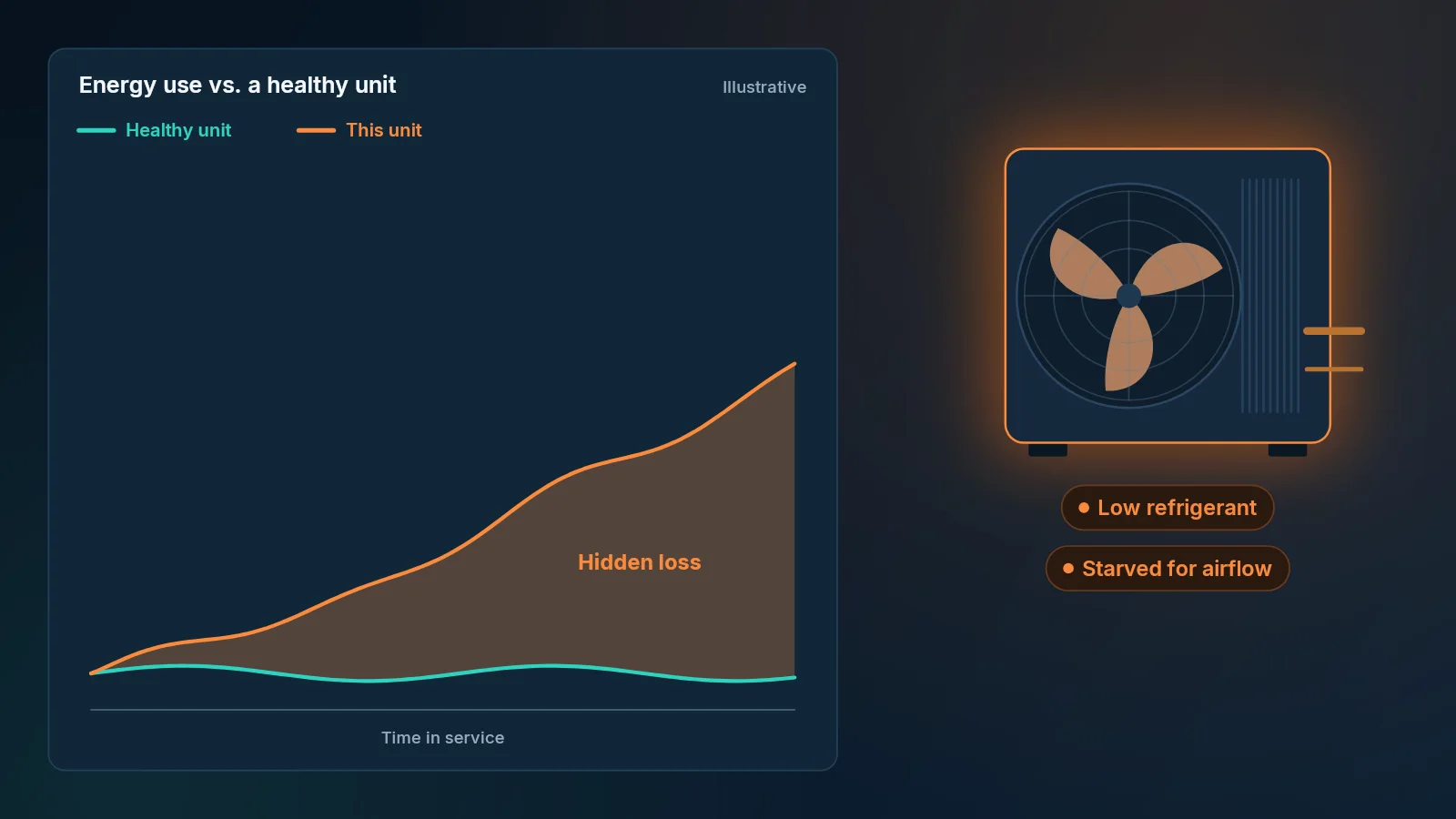
These faults do not shut the equipment off, so they stay hidden until comfort fails or the power bill spikes.
- Today the faults turn up on technician gauges, in a manufacturer portal, or when a customer complains.
- Thermostats report status, not performance.
- The losses that hide are refrigerant charge, airflow, and coefficient of performance.
Our fix
Sensing, plus a model that reads it
A few low-cost, non-invasive sensors feed a physics-informed machine-learning model.
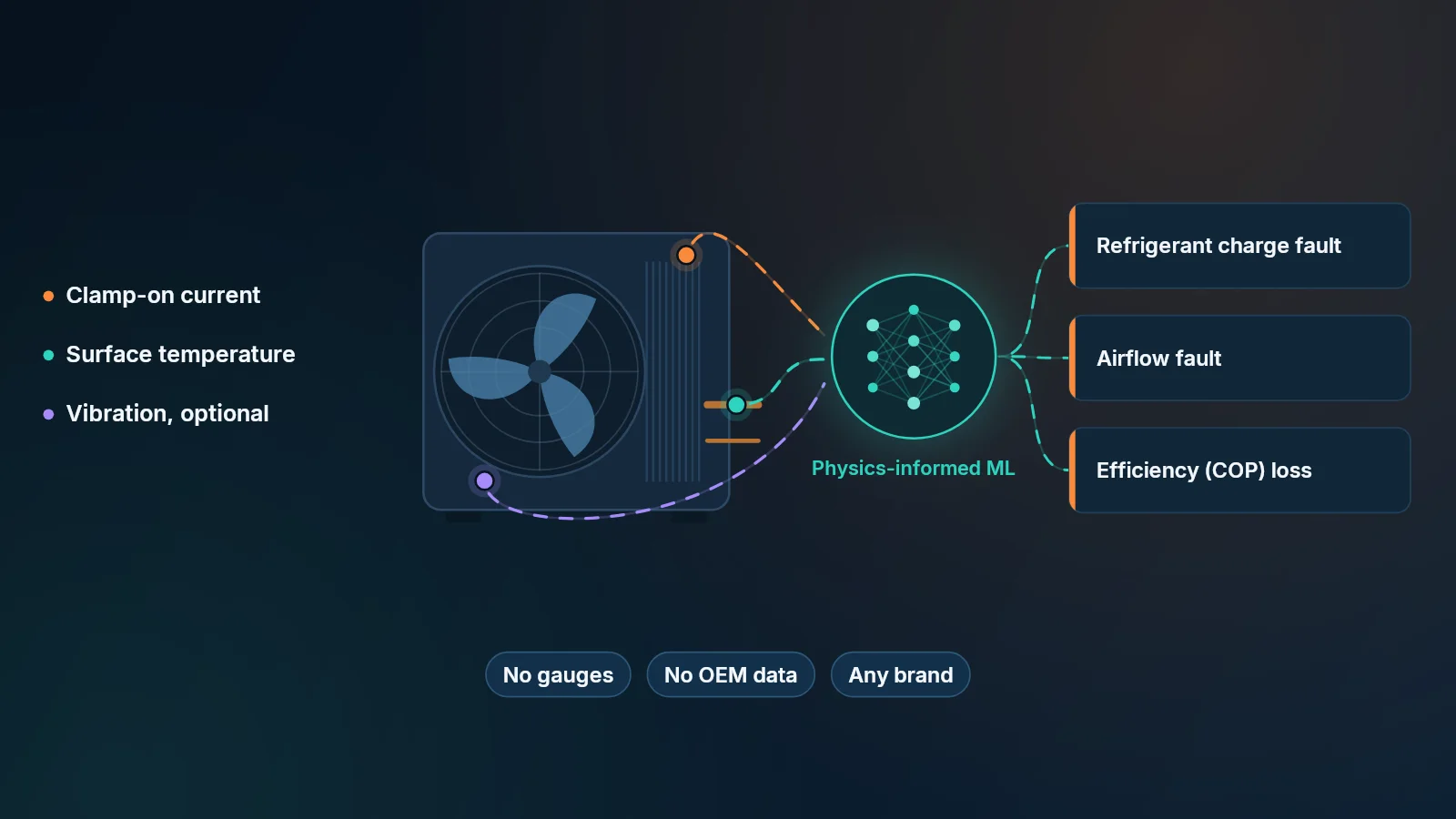
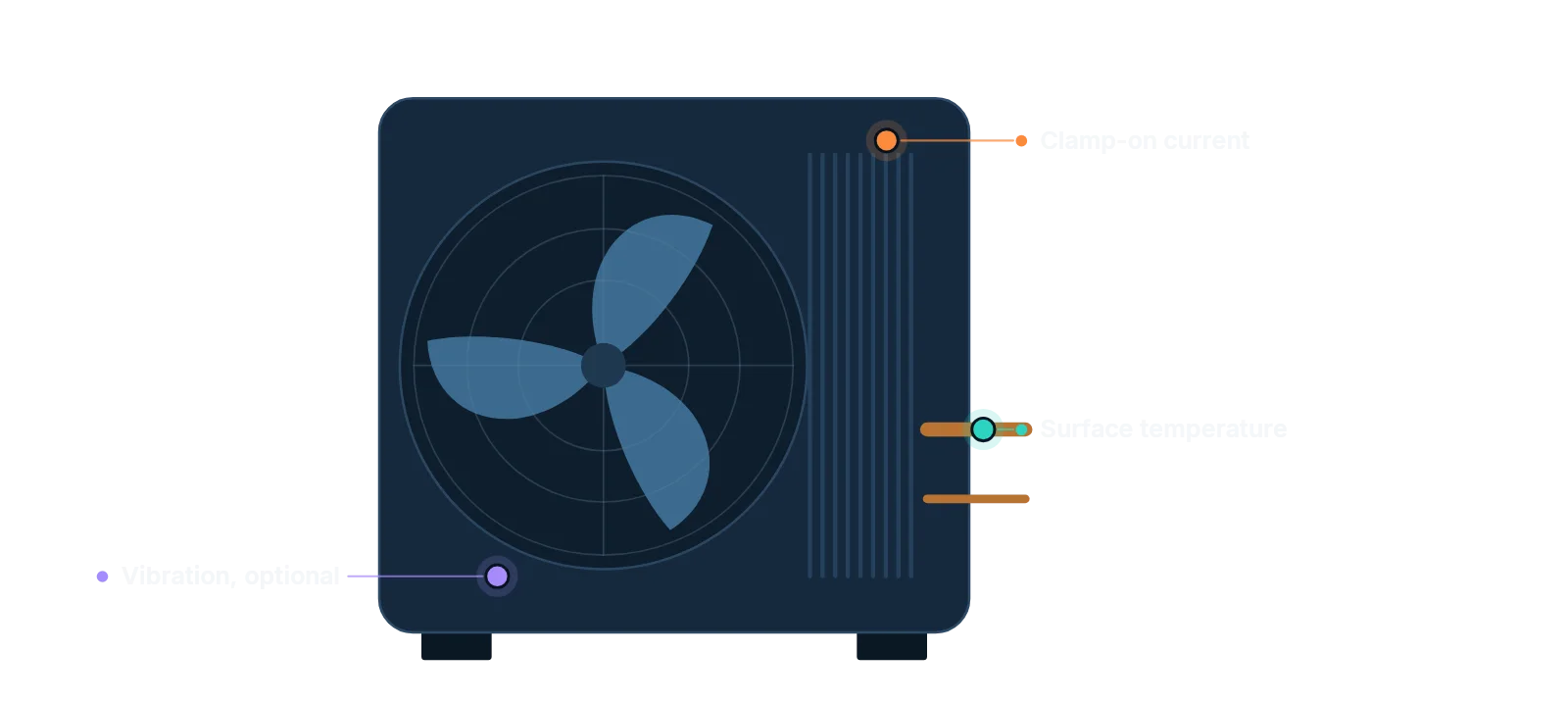
- Clamp-on current, surface temperature, and optional vibration. No refrigerant gauges.
- The model flags charge and airflow faults and estimates the efficiency that was lost.
- No manufacturer data. It is meant to work on any brand.
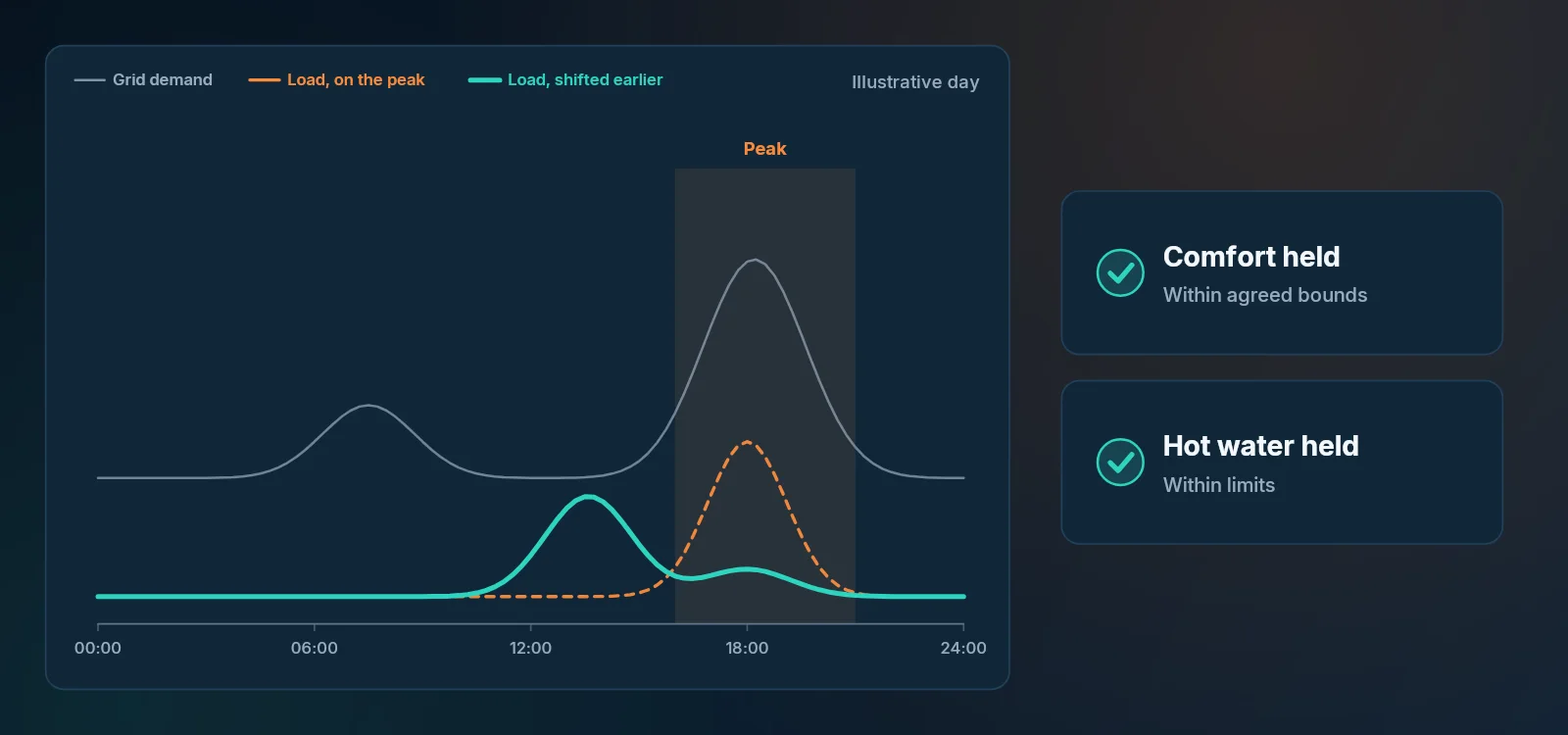
The same models can shift heat-pump and heat-pump water heater load off grid peaks while holding comfort and hot-water limits.
Phase I
Provisional feasibility targets
Bars for the research, set from published baselines.
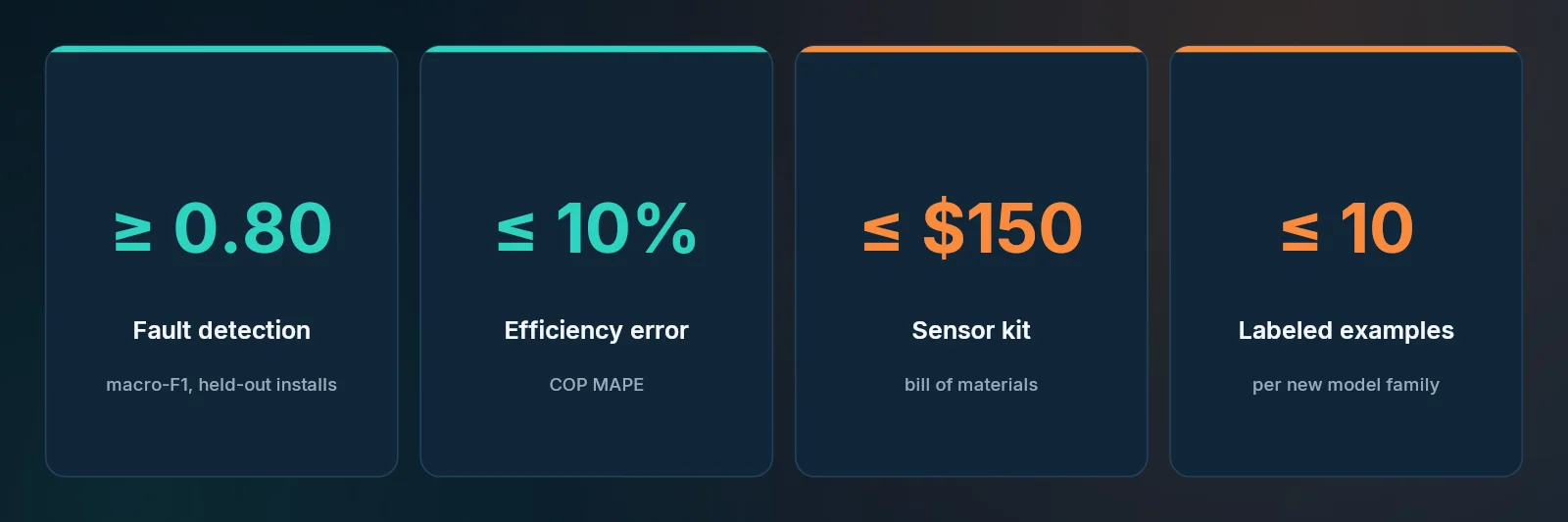
Fault-detection macro-F1 of at least 0.80, and coefficient-of-performance error of at most 10%, on held-out installs. Sensor kit at most $150. At most 10 labeled examples for each new model family.
The funding
An NSF STTR Phase I grant
Solicitation NSF 26-510. The project is intelligent diagnostics and grid-flexible control for heat pumps and heat-pump water heaters.
- Up to $305,000 over 6–18 months.
- No equity. Intellectual property stays with the company.
- With a South Carolina university partner. None chosen yet.
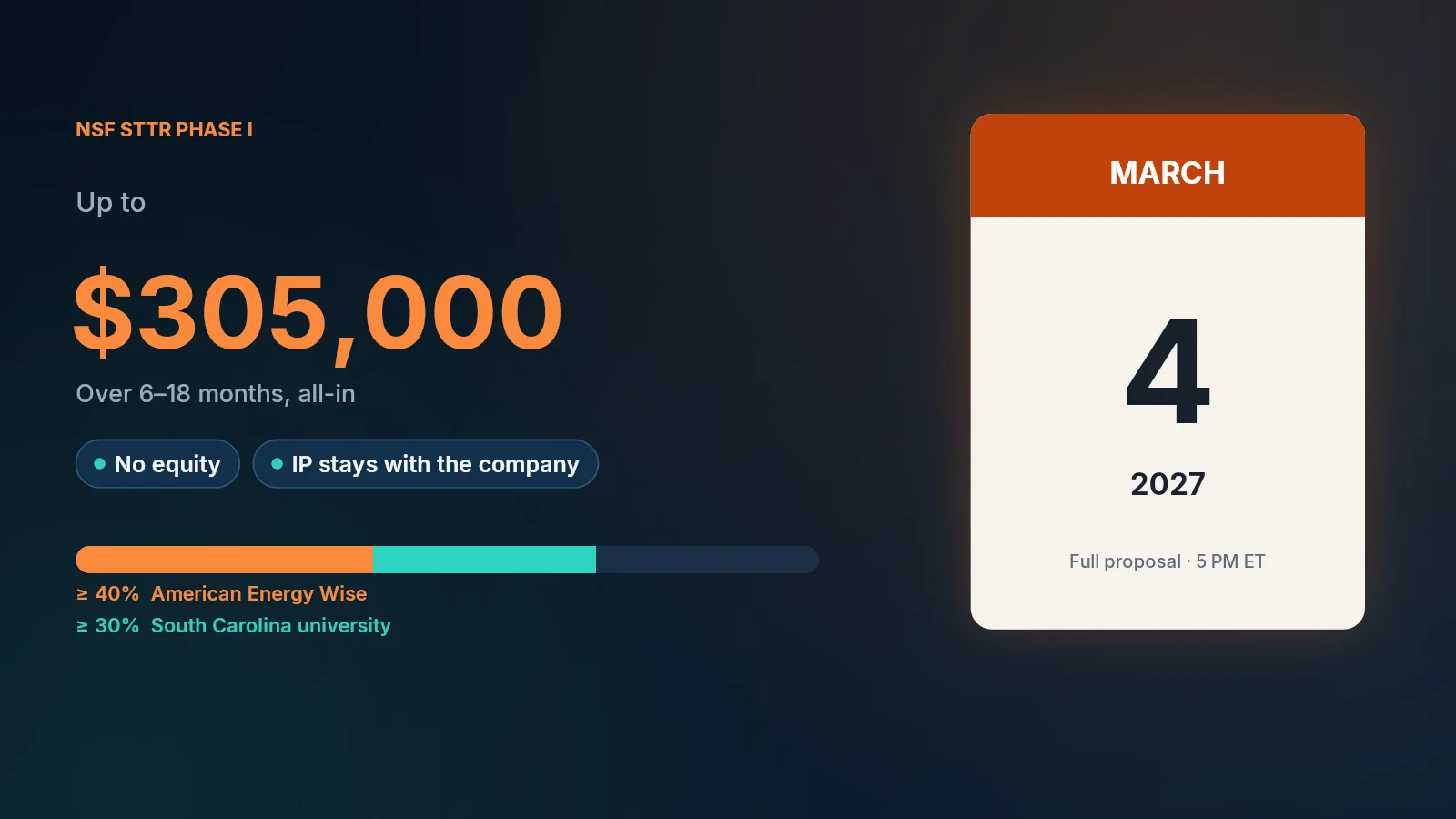
Budget split and key dates
The $305,000 is all-in. At least 40% ($122,000) goes to American Energy Wise, and at least 30% ($91,500) goes to the university.
- Project Pitch
- Planned for November 5–10, 2026
- Full proposal
- March 4, 2027, 5 p.m. ET
- Fallback deadline
- July 7, 2027
- Decision
- About August–October 2027 (estimate)
Who
American Energy Wise
American Energy Wise is the LLC that Southern Heat Pumps operates under. From Lexington, South Carolina, the company installs and services residential heat pumps and heat-pump water heaters in the Lexington and Columbia area. Founded in 2024 by Robert Stevens and Russell Stevens. Principal investigator: Robert Ray Stevens.